Bare spots are the lawn problem that drives homeowners crazy, partly because they are so visible and partly because they keep coming back. You throw down some seed, it greens up for a few weeks, and then the same patch is bare again by next season. The reason is almost always the same: the spot was repaired without fixing what caused it.
Fixing bare spots for good is a two-part job. First you figure out why the grass died there, because the cause changes the fix. Then you repair the spot the right way. This post walks through both, with the causes we see most often on Kansas City lawns and a step-by-step repair that actually holds.
First, Find Out Why the Grass Died
A bare spot is a symptom. Treat the symptom without the cause and you will be back here next year. Here are the usual suspects in the KC area.
Pet urine. Dog spots are one of the most common causes, and they have a telltale look: a dead center ring with a band of dark, extra-green grass around the edge. The nitrogen in urine burns the grass in concentrated spots while fertilizing the dilute edges.
Heavy foot traffic or pets running the same path. Grass cannot grow where it is constantly walked on or where a dog patrols the same line along a fence. The soil compacts and the grass gives up.
Grub damage. White grubs feed on grass roots in late summer, and damaged turf pulls up easily like a loose carpet. If your bare spots appeared in late summer and the dead grass lifts away with no root resistance, suspect grubs.
Lawn disease. Brown patch and other fungal diseases thrive in Kansas City’s hot, humid summers and can leave dead circles or irregular patches, especially on overfertilized or overwatered fescue.
Shade. Grass struggles to grow in deep shade under trees. If a spot has slowly thinned out as a tree matured, the problem is light, not the grass.
Drought or heat stress. Thin or compacted areas dry out fastest and die first in summer, leaving bare patches that show up as the season wears on.
Take a minute to match your bare spot to one of these before you do anything else. A pet spot, a grub spot, and a shade spot all need different handling, even though they all look like bare dirt.
The Step-by-Step Repair
Once you know the cause and have addressed it (rerouted the dog, treated the grubs, thinned the tree canopy), here is the repair that holds. Fall is the best time to do this in Kansas City, for the same reasons fall is the best time to seed any cool-season lawn, but a careful spring repair can work too.
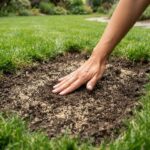
- Clear out the dead material. Rake away all the dead grass and debris down to bare soil. You need a clean surface for new seed or sod to take.
- Loosen and amend the soil. Scratch up the top inch or two of soil with a rake or hand cultivator. If the soil is compacted or poor, work in a little compost or quality topsoil. Loose, healthy soil is what lets new roots get established.
- Flush pet spots first. If the cause was dog urine, soak the area thoroughly with water before you do anything else to dilute the salts that burned the grass. Then proceed with the repair.
- Choose seed or sod. For most bare spots, quality seed is the simplest fix. Match the seed to your existing lawn, usually a tall fescue or fescue-bluegrass blend in KC. For spots you want filled instantly, or on a slope where seed would wash away, a piece of sod or plugs can be the better call.
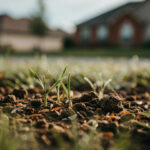
- Sow, cover lightly, and firm it in. Spread seed at the recommended rate, cover with a thin layer of soil or seed-starting mulch, and press it down for good seed-to-soil contact. The seed needs to touch the dirt to germinate.
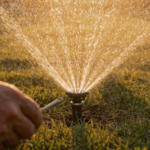
- Water consistently. Keep the repaired area consistently moist with light, frequent watering until the seed germinates, then taper to deeper, less frequent watering. According to the Johnson County K-State Research and Extension office, starting with frequent light irrigation and progressing to deeper, infrequent watering is exactly how to establish new seed successfully. This step is where most repairs succeed or fail.
When Bare Spots Are a Sign of a Bigger Problem
A single bare spot from the dog or a heavy-traffic path is a simple repair. But if bare spots keep appearing across the whole lawn, or new ones show up every season, the issue is usually bigger than any one patch.
Widespread thinning often points to a root cause that spot repair will never solve: a recurring grub problem, a disease cycle, compacted soil across the yard, or a lawn that is simply too thin overall to defend itself. In those cases, the real fix is improving the health of the entire lawn, not chasing one patch at a time.
That is the difference between patching and solving. Our plant and turf health program is built to diagnose why the damage keeps happening, whether it is grubs, disease, or soil, and address the cause so the bare spots stop coming back. Paired with regular lawn maintenance and fall overseeding, a thick, healthy lawn becomes its own best defense, because dense turf simply does not leave room for bare spots to form.
Frequently Asked Questions
Why does my lawn keep getting bare spots?
Bare spots keep returning when the underlying cause is never fixed. If you reseed a spot caused by dog urine, grubs, disease, or heavy traffic without addressing that cause, the grass will die again. Identify the cause first, fix it, then repair the spot for a lasting result.
What is the best time to repair bare spots in a Kansas City lawn?
Fall, specifically early to mid-September, is the best time to repair bare spots with seed in Kansas City, because cool-season grass establishes best then. A careful spring repair can work as a backup, but it competes with summer heat and crabgrass, so fall gives you the strongest results.
How do I fix bare spots caused by dog urine?
First soak the area with water to flush out the salts that burned the grass. Then rake away the dead material, loosen and amend the soil, sow seed matched to your lawn, and keep it consistently moist. To prevent repeat damage, train pets to use a designated area or rinse fresh spots promptly.
How can I tell if grubs are causing my bare spots?
If bare spots appear in late summer and the dead grass lifts up easily like loose carpet with little root resistance, grubs are a likely cause. White grubs feed on grass roots underground. You may also notice increased digging by birds or animals feeding on the grubs.
Should I use seed or sod to fix a bare spot?
Seed is the simplest and most economical fix for most bare spots and blends in naturally over time. Sod or plugs are better when you want an instant fix, on slopes where seed would wash away, or in spots that need to be usable right away. Either way, soil prep and watering decide the result.
Stop Patching, Start Solving
A bare spot here and there is part of owning a lawn. But if you are repairing the same patches season after season, the lawn is telling you something, and it is worth listening.
If you want bare spots fixed for good, not just covered up, contact 4T Total Lawn or call 913-888-0997. We will find out why the grass is dying and build a plan to keep your whole lawn thick enough that bare spots stop showing up. We have been solving Kansas City lawn problems since 1977.