There is a quiet shift happening in Kansas City yards. More homeowners are trading thirsty, high-maintenance plantings for something that belonged here all along: native plants. The appeal is simple. Plants that evolved on the Kansas prairie already know how to handle our clay soil, our blazing summers, our cold winters, and our unpredictable rain. They ask for less and give back more.
If you are thinking about working natives into your landscape, this guide is for you. We will cover why natives make so much sense in our climate, the specific plants that thrive in Kansas City residential yards, and how to design with them so your landscape looks intentional rather than overgrown. Designing with native and adapted plants has long been one of our favorite parts of the work, so this is territory we know well.
Why Native Plants Just Make Sense Here
Native plants are the original Kansans. They were thriving on this land for thousands of years before sprinklers, fertilizers, and lawnmowers showed up. That long history is exactly why they perform so well in a modern landscape.
They need far less water. Once established, most Kansas natives need little to no supplemental watering. Their deep root systems, some reaching many feet down, pull moisture from far below the surface where shallow-rooted ornamentals cannot reach. That is a real saving on your water bill and a real advantage in a dry July.
They handle our soil and weather. Kansas City sits on heavy clay, and our weather swings from ice storms to triple-digit heat. Plants imported from gentler climates struggle with that. Natives are built for it.
They are low maintenance. Adapted to local conditions, natives generally shrug off the pests and diseases that plague non-native ornamentals, which means less spraying, less fussing, and less replacing.
They bring the yard to life. Native plants are magnets for bees, butterflies, and birds. Butterfly milkweed, for example, is essential habitat for monarchs. A native bed is not just pretty; it is a working pollinator habitat, and the deep roots even help filter rainwater and reduce runoff.
The interest is real and growing, which is why K-State Research and Extension now runs dedicated resources for it. Their guide to planting natives in the Kansas City metro is a great companion to this post for homeowners who want to go deeper.
Native Plants That Thrive in Kansas City Yards
Here are reliable performers for residential Johnson County landscapes, grouped by what they do in a design. You do not need all of them; a handful chosen well will carry a bed.
Flowering Perennials for Color and Pollinators
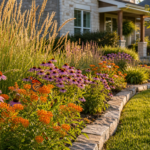
- Purple coneflower (Echinacea). The workhorse of the native garden. Long bloom, drought tough, beloved by pollinators and goldfinches.
- Black-eyed Susan (Rudbeckia). Bright gold blooms, easy to grow, and a pollinator favorite that spreads happily.
- Butterfly milkweed (Asclepias tuberosa). Brilliant orange flowers, thrives in dry spots, and essential for monarch butterflies.
- Blazing star (Liatris). Tall purple spikes that add vertical drama and draw butterflies.
- Wild bergamot / bee balm (Monarda). Lavender blooms, fragrant foliage, and a bee favorite.
- Aromatic aster. Late-season purple color that feeds pollinators into fall.
Native Grasses for Structure and Movement
- Little bluestem. A compact native bunchgrass with blue-green summer color that turns coppery in fall. Excellent for structure.
- Prairie dropseed. Fine-textured, fountain-shaped, and tidy enough for a front-yard bed.
- Switchgrass. Taller, upright, and great as a screen or backdrop, with airy seed heads that catch the light.
Shrubs and Trees with Native Roots
- Fragrant sumac. A tough, low-spreading shrub with great fall color, good on slopes.
- Serviceberry. Spring flowers, edible berries for birds, and strong fall color in a small tree.
- Eastern redbud. The classic Kansas City spring bloomer. Its bloom even doubles as the local cue for when to apply crabgrass preventer.
For dialing in specific varieties proven for our conditions, the K-State Kansas Roots and Prairie Star plant program, with a main trial site right in Olathe, tests which plants genuinely perform in Kansas before recommending them. It is a reliable shortcut to the right plant for the right spot.
Designing With Natives So It Looks Intentional
The one fear homeowners have about natives is that the yard will look wild or messy. It does not have to, and the difference is entirely in the design. A native landscape that reads as deliberate follows a few principles.
Plant in masses, not singles. Three or five of the same plant grouped together reads as intentional. One of everything scattered around reads as chaos.
Give it clean edges. A defined border, a mowed strip, a stone edge, or a hardscape line, frames a native bed and signals that it is cared for. This is where native planting and good hardscaping work hand in hand.
Layer by height. Taller grasses and shrubs in back, mid-height perennials in the middle, low growers up front. Structure makes even an exuberant planting feel composed.
Plan for all four seasons. Mix spring bloomers, summer color, fall texture from grasses, and structure that holds through winter. A good native bed is never bare.
Right plant, right place. Match each plant to its spot: sun lovers in the sun, moisture lovers in the low areas. Natives are forgiving, but they still have preferences.
This is exactly the kind of work our team enjoys, blending native and adapted plants into a design that fits your home, your sun, and your soil. You can see examples of our landscape work in our residential gallery, and our landscaping and hardscaping service brings the planting and the structural elements together into one cohesive look.
A Note on Getting Started
You do not have to convert your whole yard at once. Many homeowners start with a single native bed, a sunny corner, a slope that is hard to mow, or a strip along the driveway, and expand from there as they see how little upkeep it takes. Natives also take a season or two to settle in; the old gardener’s saying is that they “sleep, creep, then leap.” Give them time, and the payoff is a landscape that gets easier and more beautiful every year.
Frequently Asked Questions
What are the best native plants for a Kansas landscape?
Reliable Kansas natives for residential landscapes include purple coneflower, black-eyed Susan, butterfly milkweed, blazing star, and wild bergamot for color, plus little bluestem and prairie dropseed for structure. Eastern redbud and serviceberry are excellent small native trees. Choose a handful suited to your sun and soil rather than one of everything.
Do native plants really need less water?
Yes. Once established, most Kansas native plants need little to no supplemental watering because their deep roots reach moisture far below the surface. They are adapted to local rainfall patterns, which lowers your water bill and keeps the landscape resilient through dry summer stretches.
Will a native plant garden look messy or overgrown?
Not if it is designed well. Planting in masses, giving beds clean edges, layering plants by height, and matching each plant to the right spot all make a native landscape read as intentional. Good design and a defined border are the difference between a polished native bed and a weedy-looking one.
When is the best time to plant natives in Kansas City?
Spring and early fall are both good planting windows in the Kansas City area. Spring lets plants establish through the growing season, while fall planting takes advantage of cooler temperatures and lets roots settle before winter. Either way, water new plantings until they are established, then let them take over.
Are native plants good for pollinators in Kansas City?
Very. Native plants are magnets for bees, butterflies, and birds because local pollinators evolved alongside them. Butterfly milkweed is essential habitat for monarchs, and plants like coneflower and bee balm feed pollinators all season. A native bed doubles as a working pollinator habitat.
Bring the Kansas Prairie Into Your Yard
A native landscape is one of the smartest investments you can make in a Kansas City yard: less water, less maintenance, more life, and a look that belongs here. The hardest part is just getting the design right, and that is the part we love.
If you are ready to work natives into your landscape, contact 4T Total Lawn or call 913-888-0997. We will design a planting that fits your home, your conditions, and the way you want to use your yard, drawing on everything we have learned creating Kansas City landscapes since 1977.